 Tulum City Guide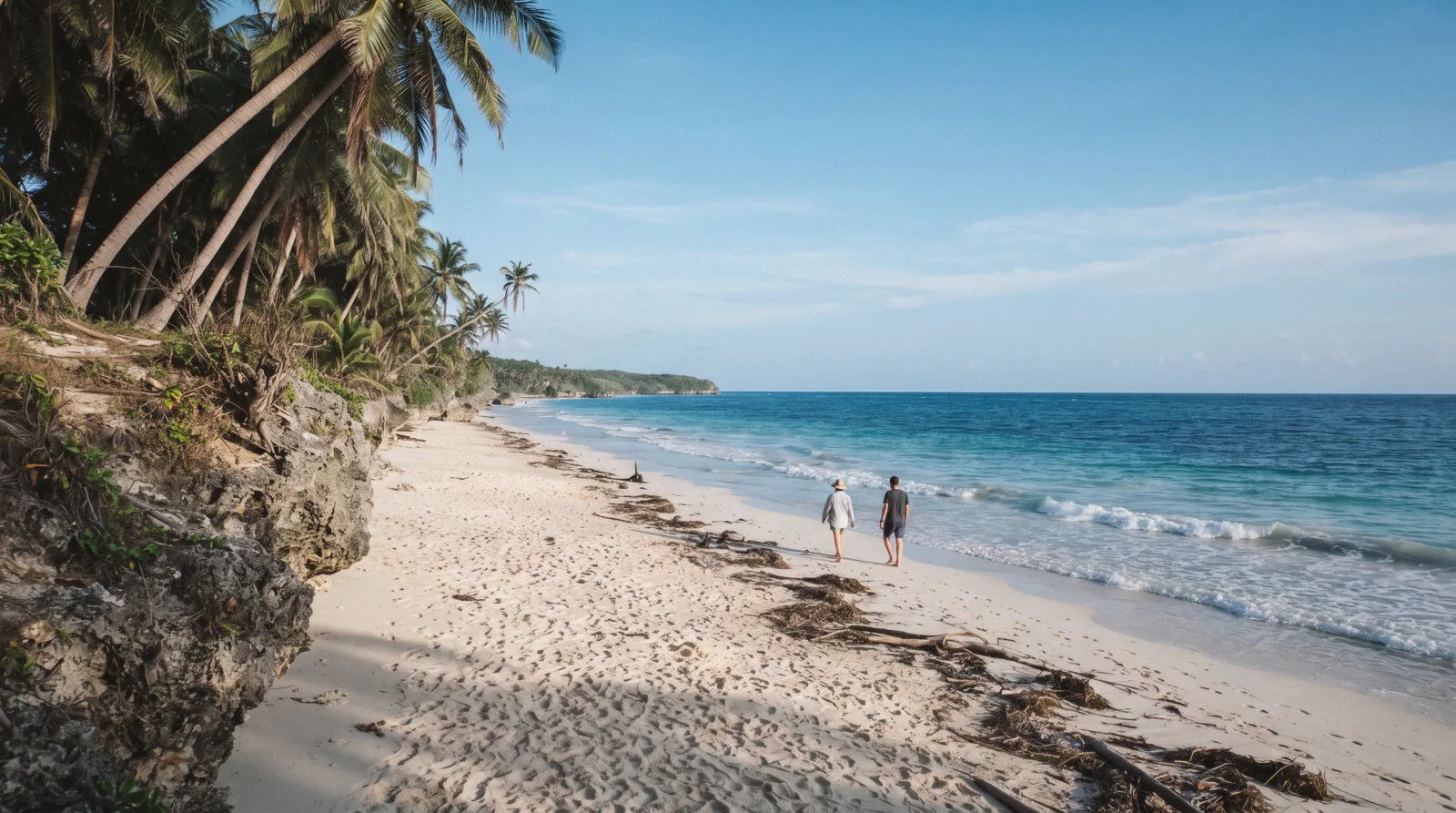
Tulum Beaches
Tulum beaches are one long strip of white sand running south from the ruins, and the single most useful thing to know about them is legal: every beach in Mexico is public, including the ones behind the hotels. What varies is access — where you can walk on, where you can leave a bicycle, and where a sunbed comes with a minimum spend. For the rest of the coast, see things to do in Tulum.
Quick answer Which beach, how to get on it, and what it costs
The sand is free everywhere by law. Playa Paraíso and the beaches directly under the ruins are the easiest to walk onto, with public access and no minimum spend. Further south the hotels line the dune and access is through gaps between them or through a club. The reef sits a few hundred metres offshore along the whole strip.
Key takeaways
- Every beach in Mexico is federal public land — a hotel can own the building, not the sand, and the beach clubs charge for a sunbed rather than for entry
- Easiest free access: the public beaches at the north end, a short walk from the ruins and reachable by bicycle from town
- The water is 26–30 °C all year and the reef is a few hundred metres out — a two-hour snorkel reaches two spots on it from the sand
- Sargassum is the variable nobody can forecast; when it lands, the cenotes and the lagoons are unaffected
The Tulum beaches, north to south
Distances are from Tulum town by the beach road, on our own measurement. Nothing here has an entrance fee; what changes is how easily you get on and what is behind the sand.
| Beach | From town | Access | What it is like |
|---|---|---|---|
| The sand below the ruins | About 5 km | Inside Parque del Jaguar, on the park's hours | The cove the Maya used; stairs open or shut at the gate's discretion |
| Playa Paraíso | About 5 km | Public access, free, bicycle parking | The classic wide white strip under the cliff line |
| Playa Pescadores | About 6 km | Public access beside the fishing boats | Working boats, snorkel departures, calm early |
| The hotel-zone strip | 6–10 km | Gaps between properties, or through a club | Narrower sand, sunbeds, minimum consumption |
| Playa Santa Fe | About 5 km | Public, north end | Quieter, rougher underfoot, popular with campers historically |
One thing worth repeating because it is repeatedly obscured: there is no legal private beach in Mexico. If a gate stops you reaching the sand, the correct assumption is that the path is private, not the beach.
What to do in the water here
The reef and the bay north of town are what the beach is actually for. Prices as listed by GetYourGuide.
 from $35.87
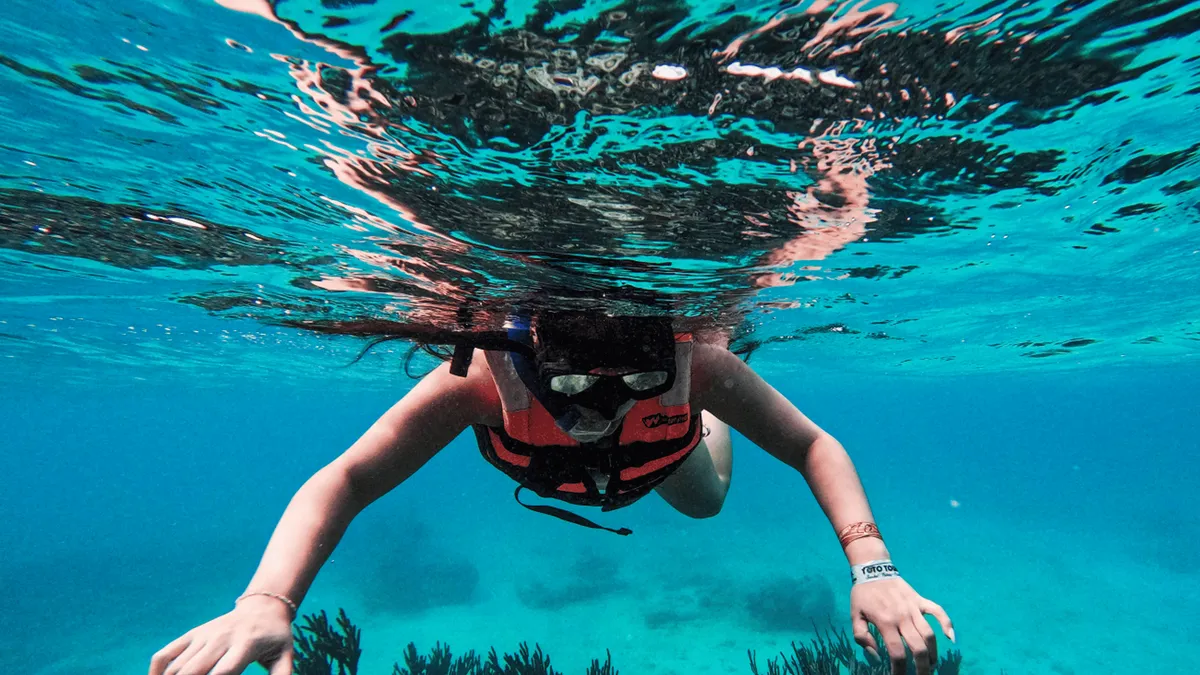
2-Hour Tulum Snorkel: Sea Turtles, Stingrays & Coral Reef
Two hours, two spots on the reef inside Tulum National Park, gear and tips included. The cheapest hour in the sea, straight off the beach.
Check Availability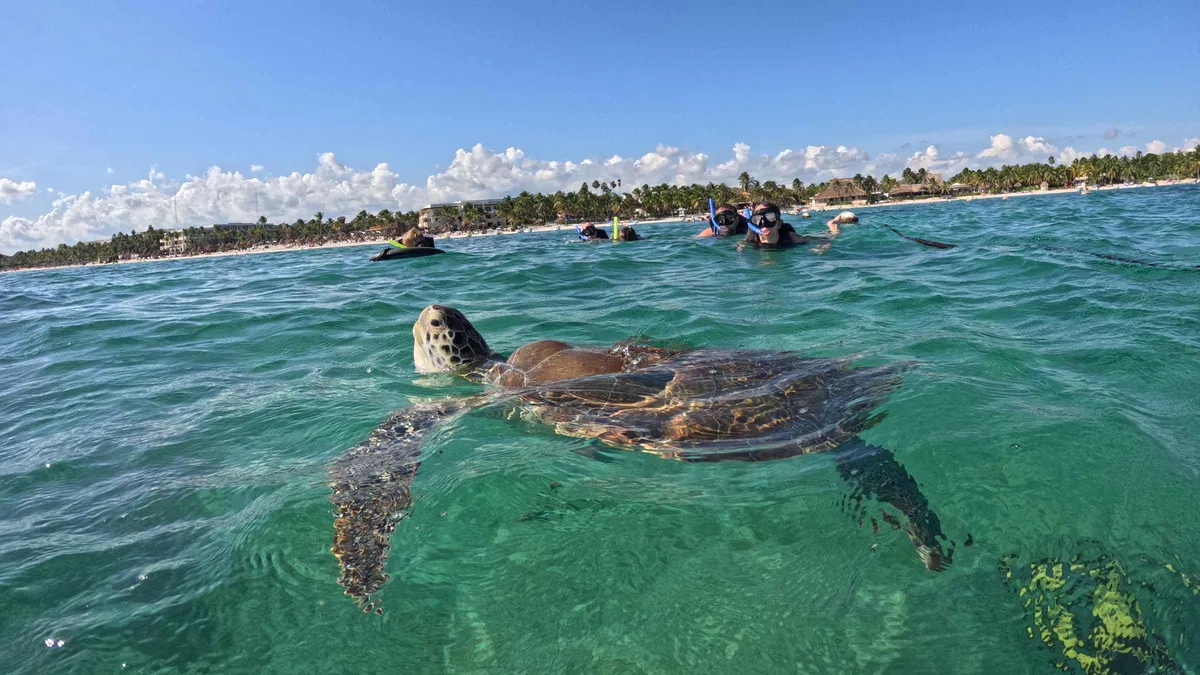 from $37.39
Akumal Beach: VIP Sea Turtle Swim, Guided Snorkeling + GoPro Photos
Wristband entry, a local licensed guide, lockers and GoPro photos. Book the first slot: the bay is calmest and the guides put fewer people in.
Check Availability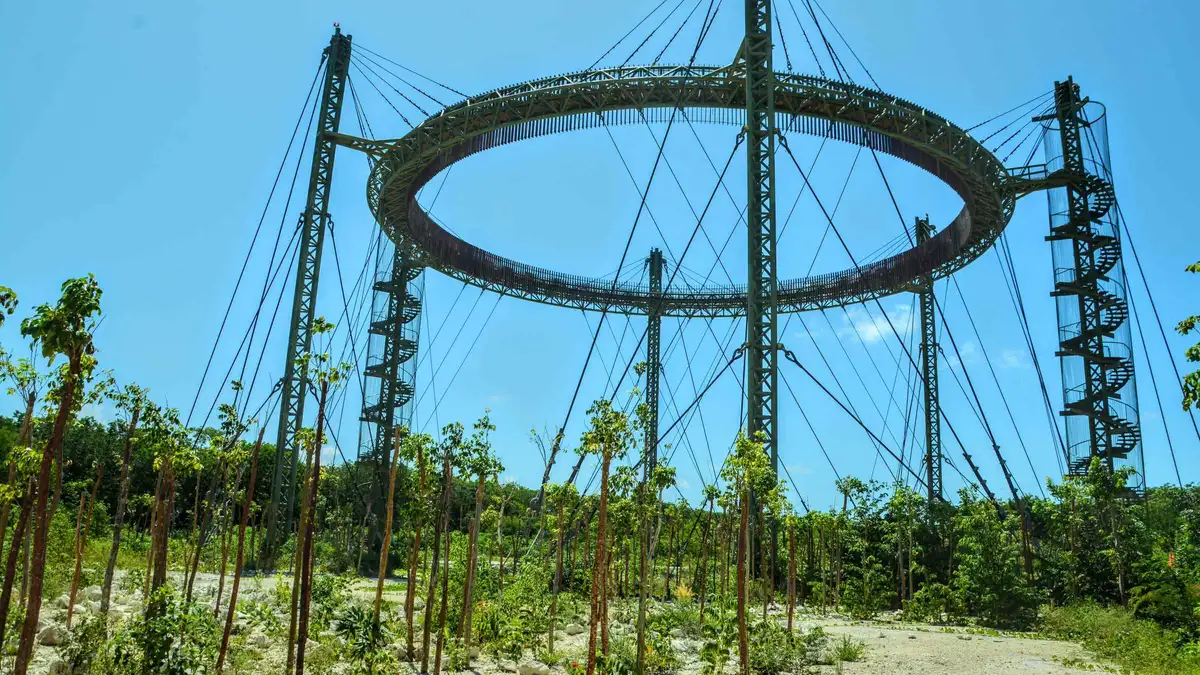 from $105.67
Tulum Jaguar Park Day Pass: snorkeling, lunch at the beach, and exploring the area
A full day inside Parque del Jaguar — transport, guided walk, reef snorkel and lunch by the sea. For the beaches, not the temples.
Check Availability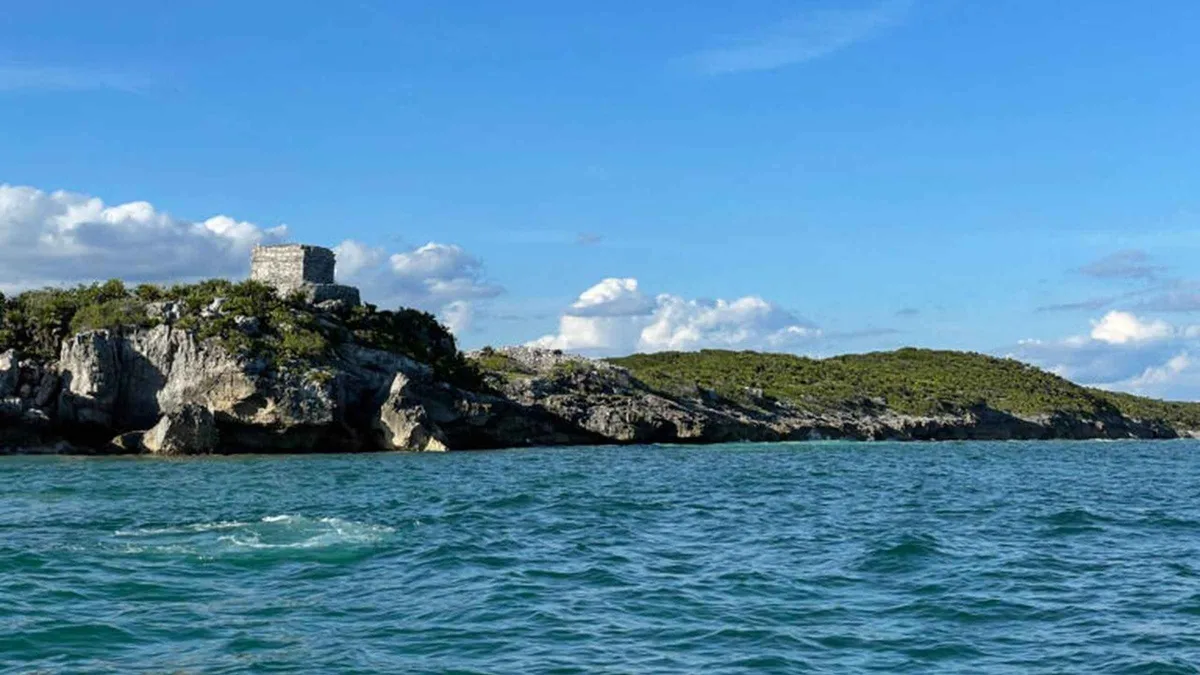 from $175
Tulum: Ruins by Boat, Swim with Turtles & Cenote Tour
The only way to see the cliff from the water: a boat along the ruins coast, then a turtle snorkel, a cenote and lunch.
Check AvailabilityPrices, ratings and details are the platform's own. Dollar figures are the listed prices. The platform bills in your account's currency.
Why every beach is public, and what that means at a gate
Mexican beaches are federal maritime land — the zona federal marítimo terrestre — and cannot be privately owned.
In practice that means a hotel or a club can own the building and the land behind the dune, and can decide who walks through its property, but it cannot own the sand or stop you being on it. The distinction sounds academic until you are standing at a rope with a sign on it.
The workable version for a visitor: use a genuine public access point — the ones at the north end near the ruins are the obvious ones — and walk along the sand from there. Nobody will object to you walking. What you cannot do is use a club's sunbeds, showers or shade without buying what the club sells, which is entirely reasonable and is priced on its own page. Once you are settled on the sand, the same stretch of coastline is also where many tulum tours set out from, so browsing the guided tours from Tulum is a natural next step when planning your beach days.
Getting to the beach, and parking a bicycle
The four kilometres between the town and the beach road is the whole logistics problem of a beach day here.
By bicycle it is about twenty minutes on a flat path beside the road, which is what most people staying in town do; the public access points at the north end have somewhere to leave a bike. By taxi it is a negotiated fare with no meter, dearer at night — the getting-around page covers why. By car it is paid parking, scarce in the middle of the day, and enforced.
One piece of timing that matters more than it sounds: the road is unlit. A sunset drink on the beach road means riding home in the dark on a road shared with taxis, so either take lights or plan to pay for the ride back.
The reef, and swimming here
The Mesoamerican reef runs the length of this coast a few hundred metres offshore, which shapes both the swimming and the sand.
Inside the reef the water is shallow, warm — 26 to 30 °C all year — and usually calm, which is what makes the strip so photogenic. Outside it is open Caribbean. A two-hour snorkel from the beach reaches two spots on the reef itself and is the cheapest time in the water on this coast; north of town, Akumal is the turtle bay, where the swim is a regulated activity with a certified guide.
There are no lifeguards on most of the strip. The usual coastal rules apply: watch for boat channels near the fishing beaches, do not swim out to the reef unaccompanied, and treat a strong onshore wind as a reason to go inland instead.
Turtles nest here
The beaches on this stretch are nesting ground, and the national park asks visitors to keep off marked sections and to keep torches and phone lights off the sand at night during the nesting months. Hatchlings navigate by the brightness of the horizon, and a white light sends them the wrong way. It is the one beach rule on this page that is not about you at all.
Sargassum, honestly
The brown seaweed is the reason some visitors leave disappointed, and the reason this site will not promise you a clean beach.
Sargassum arrives on Caribbean-facing beaches in the warmer half of the year, driven by ocean currents rather than by local weather. Volumes vary hugely between years, weeks and even beaches a kilometre apart. State monitoring reports exist but are retrospective — they record what landed, not what will land.
When it is bad, hotels rake it at dawn and the water at the shoreline is brown and smells. When it is not, the strip looks like the photographs. Neither state is predictable months ahead, which is why the plan that survives a bad week is one that includes the cenotes, Sian Ka'an and the inland sites — none of which the weed touches.
Where to go from the sand
The beach is one of three kinds of water here, and the other two are minutes away.
Tulum beach clubs
What a sunbed actually costs, how minimum consumption works, and which clubs are on public access points. The beach-clubs page prices the alternative to a towel.
Along the same stripTulum cenotes
Fresh water at about 24 °C, unaffected by wind, rain or sargassum. The cenote index marks which gates take cash only.
3–25 minutes inlandAkumal Bay
Green turtles in waist-deep water, guided entry only under federal rules. Akumal is the one beach on this coast where the swim is regulated.
25 min northTulum beaches: what people ask
Are Tulum beaches free?
Yes. Every beach in Mexico is federal public land and cannot be privately owned. What costs money is a sunbed, a parasol and a bar tab at a club — the beach-clubs page explains how minimum consumption works.
Which is the best public beach in Tulum?
Playa Paraíso, for the width of the sand, the free access and the walk from the ruins. Playa Pescadores next to it is where the boats leave from and is calmer early. The table above sets the strip out north to south.
Can you swim at Tulum beach?
Yes — the water inside the reef is shallow, warm and usually calm, between 26 and 30 °C all year. There are no lifeguards on most of the strip, and a strong onshore wind is a good reason to go inland to a cenote instead.
How do you get to the beach from the town centre?
About four kilometres, twenty minutes by bicycle on a flat path beside the road, or a negotiated taxi fare — there is no meter. The road is unlit at night, which is the part to plan for; getting around covers the options.
Is there sargassum on Tulum beaches?
Often, in the warmer half of the year, and nobody can tell you in advance. Monitoring is retrospective and volumes swing week to week. A trip that includes the cenotes and the reserve is weed-proof; one built entirely on a beach chair is not.
Can you visit the beach inside the archaeological site?
Sometimes. The cove inside the archaeological site has a sand beach and wooden stairs, and whether they are open is decided at the gate that day. The reliable alternative is a short walk south to the public beaches — the ruins page explains the access.
Prices, hours and terms are set by the venue or operator and confirmed at checkout.
We may earn a commission if you book through one of our links, at no extra cost to you. Full affiliate disclosure